What Is in a First Aid Kit?
A home first aid kit is a small set of dressings, plasters, bandages and simple tools for minor injuries. The UK Be Ready list names nine things to have in the house, and a workplace kit is chosen differently.
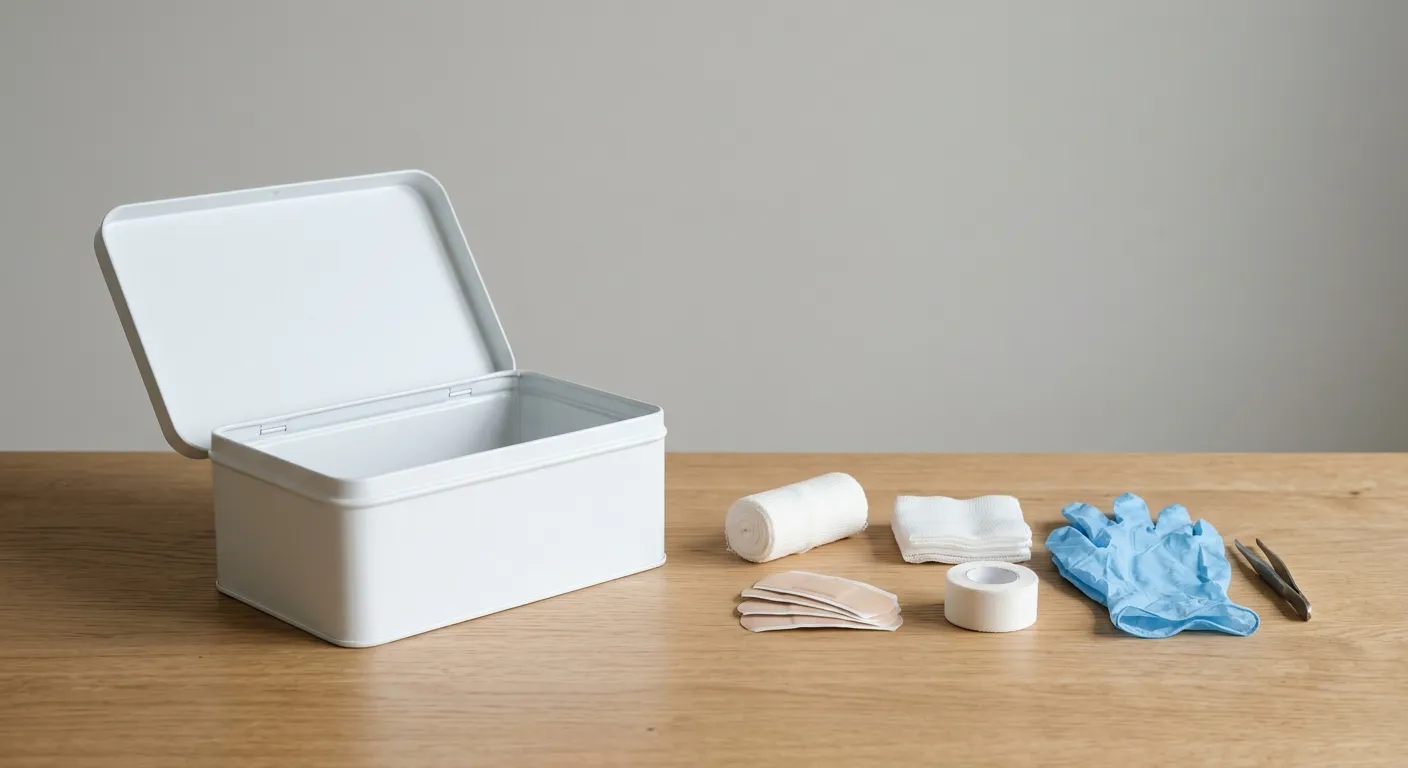
The home list people actually mean
When someone asks what is in a first aid kit, they usually want the box for the house, not a paramedic bag. The UK government's Be Ready checklist names the items to have at home:
- waterproof plasters,
- bandages,
- a thermometer,
- antiseptic,
- eyewash solution,
- sterile dressings,
- disposable gloves,
- medical tape,
- tweezers.
That is enough for cuts, grazes, splinters and a temperature. It is not a substitute for knowing what to do with them. The same campaign suggests learning basic first aid, including a free workshop or a course an employer will pay for. The British Red Cross and St John Ambulance both publish short guides to the skills, which matter more than adding another gadget to the box.
A pharmacy kit is a fair start. Open it once and compare it with the list above. Many cheap boxes are mostly plasters and one bandage. Add the thermometer, eyewash, gloves, tape and tweezers if they are missing, then show everyone in the house where the box lives.
Home, work and car
The contents change with the place. A home box can include things a workplace box should not.
| Item | Home, from the Be Ready list | Workplace | Car |
|---|---|---|---|
| Waterproof plasters | Yes | Usually, after a needs assessment | A few, in a small box |
| Sterile dressings and bandages | Yes | Yes, in sizes that match the work | A small selection |
| Gloves | Yes | Yes | One pair at least |
| Medical tape | Yes | Often | If the box has room |
| Eyewash | Named for the home | If eyes are a realistic risk at that site | Useful, if it has not frozen or baked in the boot |
| Thermometer | Named for the home | Not a standard requirement | Optional |
| Tweezers | Named for the home | Often left to the home kit | Useful for the same reason as at home |
| Antiseptic | Named for the home | Follow the needs assessment | A few wipes |
| Tablets and other medicines | Keep them in a separate medicine cabinet, not loose in the dressings | HSE recommends that you do not keep tablets and medicines in the first-aid box | Keep personal medicines with the person, in original packs |
Employers have to provide adequate first-aid equipment under the Health and Safety (First-Aid) Regulations 1981. HSE does not publish a fixed shopping list. The box follows a needs assessment for that workplace: how many people, what the work is, how far away help is. A kitchen and a quiet office do not need the same box. There is a British Standard, BS 8599-1, that suppliers use for small, medium, large and travel kits. Buying one of those is a common way to meet an assessment. It does not remove the need to do the assessment.
For the car, Be Ready suggests a first aid kit in the boot along with a torch, a phone charger, warm clothes, a blanket, high-visibility clothing, jump leads, food, drink and, in winter, a shovel. Heat and cold in a parked car age sterile packs and eyewash faster than a hallway cupboard. Check the car box when you check the house box.
What to add for the people you live with
The printed list is a minimum. Add what your household already uses, and leave out what you will not:
- Any personal kit a doctor has already told you to carry, such as an inhaler or an adrenaline auto-injector, stored the way you were shown.
- A written list of allergies and of regular medicines and doses, on paper. In a power cut you may not be able to open a phone.
- Blunt scissors and a few safety pins, which make bandages usable.
- A small torch, because cuts happen in the dark. Be Ready prefers a torch to candles.
- Nothing you do not know how to use. An unfamiliar device is not a plan.
Keep the box where an adult can reach it quickly and a small child cannot. Medicines belong in their own place, out of reach, in the original box so you can still read the dose and the expiry. The medicines guide covers storage and repeat prescriptions. Be Ready's advice on prescriptions is to request them up to five working days before you need them, so a disruption does not start with an empty packet.
Dates, and a check twice a year
Sterile dressings, eyewash and antiseptic carry expiry dates. Plasters that have lost their stick are finished even if the date looks fine. The Be Ready campaign asks households to check emergency supplies every six months, and the first aid box belongs in that same reminder.
A routine that sticks: open the box in April and October, throw away anything used, dirty or out of date, and write the earliest date left in the box on the outside or in your stock list. Prepparia can hold that one date next to the food and the batteries, so the box shows up when you are already checking the cupboard. Replace what you used the week you used it. A box with an empty plaster slot is the usual one.
This is general information, not medical advice. For a wound, a medicine or a kit that has to cover a specific condition, ask a pharmacist, a doctor or a qualified first aid trainer. If someone is seriously hurt or unwell, call 999.
First aid kit questions
What is in a first aid kit for the home?
The UK Be Ready checklist names waterproof plasters, bandages, a thermometer, antiseptic, eyewash, sterile dressings, gloves, medical tape and tweezers. Add scissors, safety pins and a written list of allergies and medicines.
What does a workplace first aid kit contain?
Whatever the employer's first-aid needs assessment says is adequate. HSE does not set a single national list. Many workplaces buy a kit that meets BS 8599-1 and then adjust it. HSE recommends leaving tablets and medicines out of the workplace box.
Do first aid supplies expire?
Yes. Sterile dressings, eyewash and antiseptic are dated. Check the box at least twice a year and after you use it, and replace anything out of date or used up.
Should I put painkillers in the first aid kit?
Not in a workplace box. At home, keep medicines in a separate cupboard, in the original packaging, where children cannot reach them. Ask a pharmacist what is sensible for your household.
Is a first aid kit the same as knowing first aid?
No. The box covers minor injuries you already know how to treat. A short first aid course teaches you when to use it and when to call 999.
Where this comes from
The home contents list is from the Be Ready campaign and its checklist (PDF), which are Crown copyright and used here under the Open Government Licence. Workplace duties and the advice to keep medicines out of the first-aid box are from the HSE first aid pages. Training and skills sit with the British Red Cross and St John Ambulance. A numbered family kit based on the American Red Cross list is on our home first aid guide.
Related guides
What goes in a home first aid kit
A family kit with the American Red Cross quantities.
UK 3-day emergency kit
The first aid box is one line on the Be Ready checklist.
Medicines and prescriptions
Keep tablets out of the workplace box and separate at home.
Go bag and car emergency kit
A smaller kit for the car and the bag.
Sterile packs expire. A date on the box is how you notice.